India tourist visa online application: a 5-minute guide
An India tourist visa online application can be filed in minutes. That does not mean it will be approved in minutes.
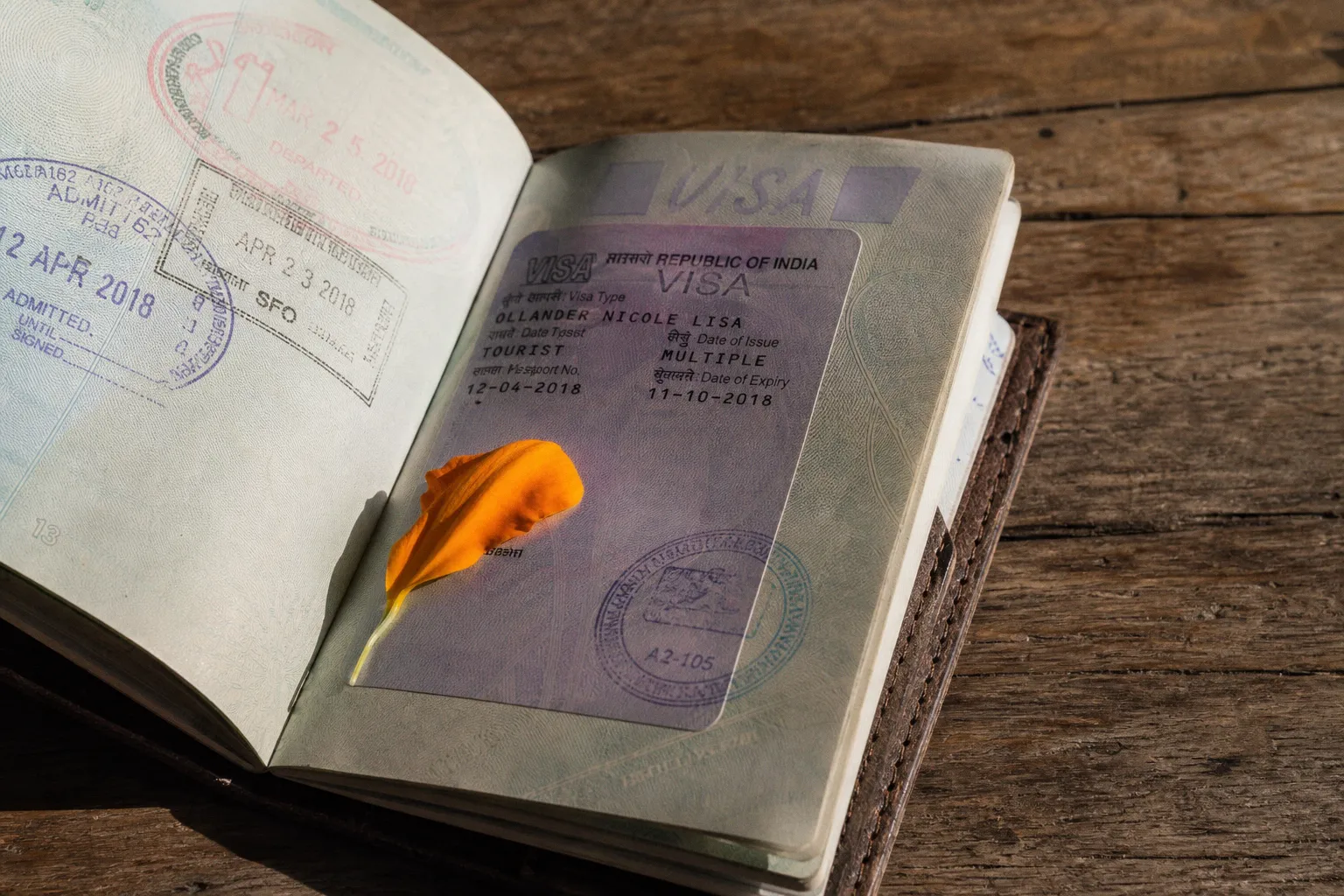
For eligible passport holders, the official e-Tourist Visa process has a fixed sequence: submit the online form, upload the required files, pay online, wait for the Electronic Travel Authorization (ETA), and travel only when the ETA status reads “GRANTED.” A completed form, a payment receipt, or an email acknowledging the application is not permission to board.
The critical deadline is four days before arrival. You may apply up to 120 days before your proposed travel date, but the application and payment must be completed at least four days before arrival. Treat that as a minimum lead time, not a tourist visa processing time guarantee.
Use the official India visa application portal only
India’s e-Visa service is fully online. The Government of India identifies one official India Visa Online portal for e-Visa submissions. Applications filed through agencies, “express approval” services, or lookalike websites introduce an avoidable problem: you may pay additional fees, submit data to an intermediary, and still have no control over the actual application status.
The operating sequence is straightforward:
1. Confirm that your nationality is eligible for an e-Visa. Eligibility is country- and territory-specific. Do not assume that a passport from a visa-friendly country is automatically eligible.
2. Select the e-Tourist Visa category and expected arrival date. The date entered controls whether you are within the permitted application window.
3. Complete the online form exactly as your passport shows the information. Names, passport number, date of birth, nationality, and place of birth must match the passport bio-data page.
4. Upload the photograph and passport bio-data page.
5. Pay the e-Visa fee online. The India visa fee for foreigners is not one universal figure. It varies by nationality or territory, and a bank transaction charge may apply.
6. Monitor the application status and email inbox. Travel only after receiving the ETA marked “GRANTED.”
7. Print the granted ETA. Carry it with the passport used for the application.
The application is complete only when the ETA is granted. Payment alone does not create travel authority.
Do not make non-refundable flight arrangements on the assumption that an application filed four days before departure will be decided within four days. The official rule establishes the latest filing point. It does not promise an approval deadline.
Documents for an India e-Visa: the passport test comes first
Most failed or delayed applications are not legal problems. They are document problems: an insufficiently valid passport, a poor scan, an inconsistent name, or a photo that does not meet the stated format.
The core documents for India e-Visa applications are limited, but their condition matters.
| Requirement | Official standard | Practical implication |
|---|---|---|
| Passport validity | At least six months when applying | Renew first if the passport is close to expiry. Do not assume validity through the departure date is sufficient. |
| Blank passport pages | At least two blank pages | These are needed for immigration stamping. A passport can be valid but still unsuitable if it is full. |
| Passport upload | Bio-data page | Upload the page containing the photograph, personal details, passport number, and machine-readable zone. |
| Photograph | Recent, front-facing, white background | Use a current passport-style image. Avoid shadows, tinted backgrounds, sunglasses, and cropped faces. |
| Passport type | Ordinary passport required | Diplomatic passports, official passports, laissez-passer documents, and other international travel documents are not eligible for the e-Visa route. |
| Children | Separate passport and application | A child cannot travel on another applicant’s e-Visa application. |
Use the passport that will physically travel with you. A replacement passport issued after the e-Visa is granted can break the link between the ETA and the travel document. If the passport changes, do not assume the existing ETA remains usable.
The form also expects operational evidence that the trip is genuine. Eligible e-Visa travellers must hold a return or onward ticket and have sufficient funds for the stay. Immigration officers may ask to see these documents even if the e-Visa was issued without an uploaded itinerary.
Keep the following in one folder before opening the form:
- A clear scan of the passport bio-data page.
- A compliant recent photograph.
- Your arrival airport and approximate arrival date.
- Your first accommodation address in India.
- A return or onward ticket.
- A payment method enabled for international online transactions.
- A printed copy of the granted ETA once issued.
This is not a situation for improvised phone screenshots at an airport gate. Save files locally, retain the application reference number, and print the ETA. Digital copies are useful; paper remains the lower-risk format at check-in and immigration.
For travellers managing devices, booking records, and home systems remotely during a long absence, a separate guide to smart-home and connected-lifestyle planning can help with the non-visa part of departure preparation. It does not replace any Indian immigration requirement.
The 120-day window: calculate from arrival, not departure
The India tourist visa online application window opens 120 days before the proposed date of arrival. It closes at least four days before arrival.
This distinction is routinely mishandled by travellers who count backward from their departure date or from a connecting flight. India uses the intended arrival date in India.
Example: if the planned arrival is 20 October, the application can be submitted no earlier than roughly 120 days before that date. It must be submitted and paid for no later than 16 October. Filing on 16 October is permissible under the published minimum timing rule. It is not a safe planning standard for a flight on 20 October.
Use a larger buffer where possible. You need time for:
- A correction request or a rejected payment.
- A replacement photograph or legible passport scan.
- A mismatch between the intended arrival date and the date entered in the form.
- Airline check-in staff requiring the granted ETA before issuing a boarding pass.
- A changed flight schedule that brings your actual arrival forward.
Do not submit speculative dates simply to apply early. The proposed arrival date is part of the record. If your itinerary is not settled, wait until you can state an arrival date that is realistic and still within the 120-day window.
There is no general “visa on arrival” fallback for tourists who miss the e-Visa deadline. India’s Visa on Arrival arrangements are limited. The official scheme covers Japanese and South Korean nationals, as well as certain UAE nationals who meet prior Indian visa conditions, and it operates at Delhi, Mumbai, Chennai, Kolkata, Bengaluru, and Hyderabad airports. For other travellers, it is not an airport workaround for a late e-Visa application.
Choose the validity period without confusing it with permitted stay
The official system lists three e-Tourist Visa options: 30 days, one year, and five years. These labels describe visa validity. They do not all describe the same permitted stay pattern.
| e-Tourist Visa option | Validity basis | Stay rule confirmed in official guidance |
|---|---|---|
| 30-day e-Tourist Visa | Short-term option | Check the issued ETA carefully for entry and stay conditions. Official guidance contains inconsistent wording on the number of permitted entries. |
| One-year e-Tourist Visa | 365 days from ETA grant | Total stay in India must not exceed 180 days in a calendar year. |
| Five-year e-Tourist Visa | Five years from ETA grant | Total stay in India must not exceed 180 days in a calendar year. |
The one-year visa is valid for 365 days from the date the ETA is granted, not from the date of your first arrival. Applying too early can therefore reduce the useful period if you expect to make repeat trips.
The five-year option has the same structural point: a long visa validity period does not authorize uninterrupted residence. The total stay limit is 180 days in a calendar year.
The 30-day category requires closer reading. Official material has contained conflicting descriptions of whether it permits double entry or multiple entry. Do not solve that ambiguity by relying on a blog, an old screenshot, or an airline agent’s verbal answer. Read the conditions on the ETA issued to you and plan onward travel accordingly.
Visa validity, permitted entries, and permitted stay are three separate fields. Read all three.
An e-Visa is non-extendable and non-convertible. Do not enter India on an e-Tourist Visa expecting to extend it after arrival because a trek runs late, a medical appointment changes, or a return flight becomes inconvenient. The category is not designed for that.
It is also not valid for Protected Areas, Restricted Areas, or Cantonment Areas. Travel to those locations may require prior permission from the relevant civil authority. An e-Visa does not override local access controls.
FRRO registration is another area where travellers import the wrong rule from another visa category. There is no confirmed general requirement in the current e-Visa guidance stating that every e-Tourist Visa holder must register with the Foreigners Regional Registration Office. Registration obligations can depend on the visa category, duration of stay, and visa endorsement. Read your issued visa conditions. Do not register reflexively, and do not assume the absence of a general rule eliminates a specific endorsement.
Arrival procedures: ETA, e-Arrival card, and health controls
The ETA is the immigration authorization. The e-Arrival card is not.
Foreign nationals and OCI card holders may complete the e-Arrival card online within 72 hours before arrival. It is an arrival-information submission. It does not replace an e-Visa, a regular visa, an ETA, or a passport.
At departure and arrival, keep these items immediately accessible:
- The passport used in the application.
- The printed ETA showing “GRANTED.”
- Return or onward travel evidence.
- Accommodation details for the first part of the stay.
- Evidence of sufficient funds if requested.
- A yellow fever vaccination certificate where the route makes it mandatory.
Yellow fever rules are route-dependent. India requires a valid yellow fever vaccination certificate for passengers travelling to or from yellow-fever-endemic countries. It is not a universal requirement for every visitor.
The certificate becomes valid 10 days after vaccination. A traveller arriving without a valid certificate where one is required may be quarantined until the certificate becomes valid, or for up to six days from the last possible exposure. A vaccination booked the day before departure does not solve this problem.
Transit history matters. If your itinerary includes travel through a yellow-fever-risk country, verify the applicable health documentation before ticketing. Do not rely on the fact that your final departure airport is elsewhere.
The five-minute filing process, with the real work done beforehand
The online form itself is quick only if the inputs are ready. The practical process is this:
1. Check e-Visa eligibility for the passport you hold.
2. Confirm that arrival is no more than 120 days away and no fewer than four days away.
3. Verify six months of passport validity and two blank pages.
4. Prepare the bio-data scan and white-background photograph before starting the form.
5. Enter every passport detail character for character.
6. Pay the country-specific fee and retain the payment record.
7. Wait for the ETA email and verify the status says “GRANTED.”
8. Print the ETA and carry it with the same passport used in the application.
9. Complete the e-Arrival card within 72 hours of arrival if you choose to use that service.
10. Check health documentation if you have travelled from or through a yellow-fever-endemic country.
The India tourist visa online application is not difficult. It is procedural. The errors are predictable: applying too late, treating the e-Arrival card as a visa, using a passport with insufficient validity, and boarding before the ETA is granted.
File inside the official window. Match every field to the passport. Travel with the granted ETA in print. That is the process.