Religious festivals of India: etiquette for foreigners
The first time you stand at the threshold of a stone temple in Varanasi during Dev Deepawali, the air thick with camphor smoke and the low drone of conch shells, you may freeze.
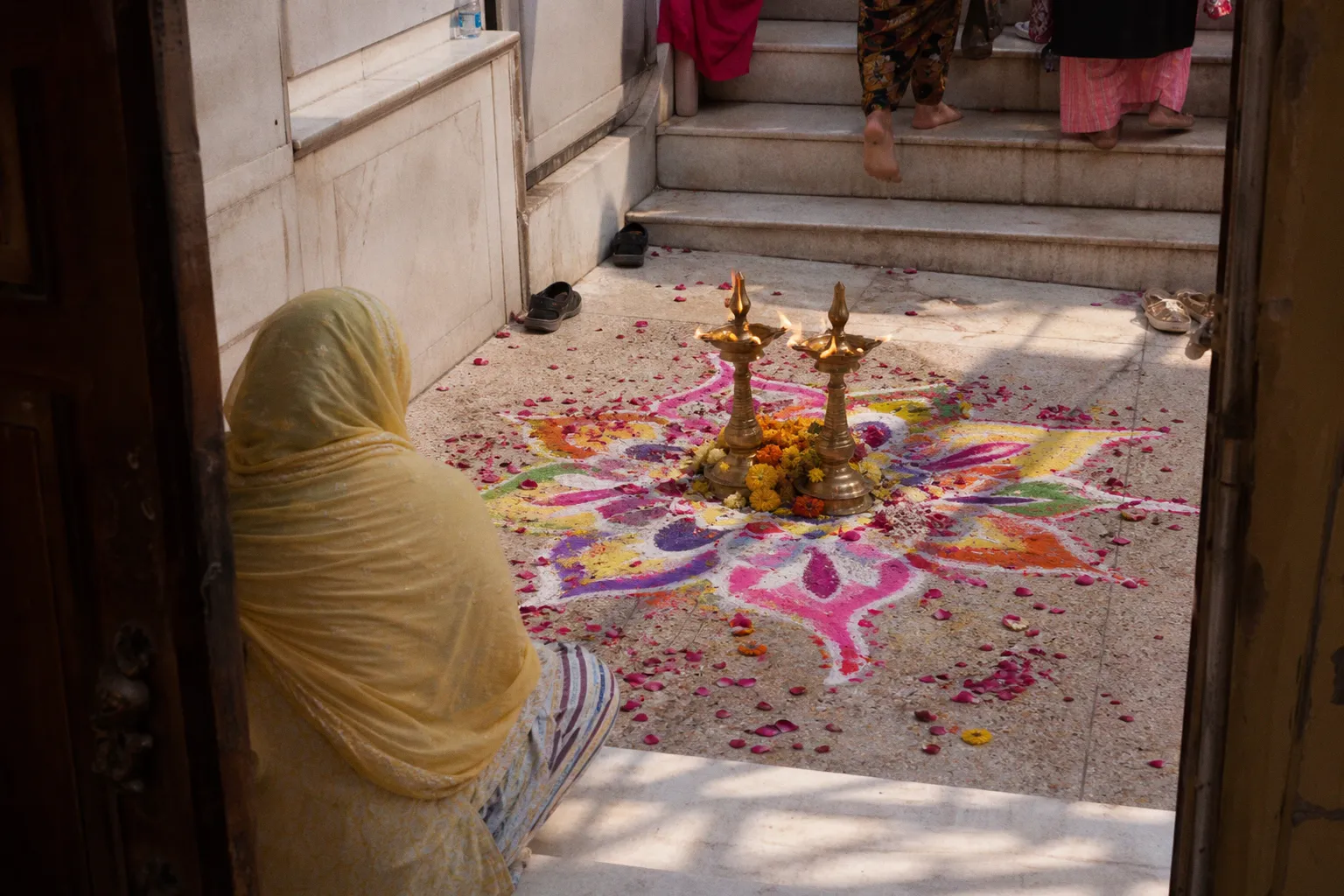
Indian festivals are remarkably welcoming. Locals will almost always guide you through a wrong move with a smile and a small correction. But walking in with a few grounded principles turns hesitation into presence, and that is what these gatherings actually reward. What follows is the etiquette that matters most, drawn from how festivals actually unfold rather than from a sterile list of taboos.
Dress codes and sacred space protocols
India's religious sites share a baseline: cover your shoulders and knees, and remove your footwear. That much is universal enough to plan a suitcase around. Beyond it, the differences between a Hindu temple, a Sikh Gurudwara, a mosque, and a Jain shrine become meaningful.
In Sikh Gurudwaras and most mosques, women and men are expected to cover their heads. A light scarf, bandana, or dupatta tucked into your daypack solves this for an entire trip. Baseball caps and sun hats do not count as respectful head coverings in these spaces, so keep them in your bag. Many mosques also require women to cover their arms fully and wear loose-fitting clothing; carrying a lightweight long-sleeve overshirt takes the guesswork out of last-minute entries into smaller neighborhood prayer halls.
The footwear question has a practical answer, too. Almost every sacred site—from the Meenakshi Temple in Madurai to the Jama Masjid in Delhi—will have a designated area or a shoe-keeper outside. A small tip, somewhere between ₹20 and ₹50, is standard for the attendant, and you will often receive a numbered token in return. Photographing your shoes before you hand them over helps in crowded festival situations where retrieval can get chaotic.
Modest clothing is your passport into every sacred space in India; a single scarf in your bag handles the rest.
A subtler rule catches travelers off guard: many traditional Hindu and Jain temples prohibit leather items inside—belts, wallets, bags, even watch straps—because of the reverence for cows. Some sites post signs at the entrance; others simply don't. The graceful move is to leave leather accessories at your hotel on temple-heavy days and carry only a cloth tote or synthetic sling with your essentials. Storing a phone charger, passport, and a water bottle in fabric rather than leather also speeds up the security check at busier shrines.
The art of receiving prasad and handling offerings
Prasad—blessed food, often a small laddu, a wedge of coconut, a spoonful of sugar, or a tulsi leaf—will be offered to you at temples and during festival gatherings. How you accept it matters as much as the act itself.
The tradition is to receive prasad in your cupped right hand, ideally with both palms held together beneath it as a sign of extra respect. The left hand is traditionally considered unsuitable for handling food and offerings. If you are left-handed, cupping your right hand fully and bringing both palms together around the offering reads as the same gesture. Eat it on the spot if you can; if you have dietary restrictions, accept it gracefully, touch it briefly to your forehead, and set it aside on the edge of the plate. No one expects a foreigner to consume ingredients they cannot, and priests are accustomed to quietly redistributing untouched prasad.
A related moment worth preparing for is the offering of a thali or a shared meal at someone's home during a festival. Wait for the host to sit first and to gesture that food has been served. Eating with your right hand is appreciated and not as hard as it looks—use the fingertips to push small portions together, lift with your thumb, and avoid reaching across the thali. A few unhurried attempts will land you in good standing.
Diwali and Eid: color symbolism and gifting as a guest
If you are invited to a home or a community gathering for Diwali, the festival of lights, two details shape the experience: color and gifts.
Black and plain white are associated with mourning or inauspiciousness during Diwali. Guests are warmly received in vibrant shades—gold, deep red, saffron orange, marigold yellow, even jewel tones. If you don't own traditional Indian clothing, a solid-colored kurta for men or a simple kurta set, anarkali, or long tunic over trousers for women blends in beautifully, though modest Western clothing in festive colors is widely accepted. The spirit of the festival is radiance, and your outfit is read as participation in that.
When bringing a gift, present it with both hands—a small box of Indian sweets (mithai), dried fruits, decorative candles, or a box of premium tea all work well. Skip wrapping paper in black or white; festive colors are appreciated. There is a quieter list of inauspicious gifts worth knowing: sharp objects like knives, clocks, empty wallets, alcohol, and non-vegetarian food are traditionally avoided because they symbolize cutting ties, time running out, or breaking with the abundance of the season.
For Eid al-Fitr and the days of Ramadan, the etiquette is closer in shape to Diwali's modesty norms. Dress conservatively, avoid eating, drinking, or chewing gum in public during daylight fasting hours, and steer clear of black clothing near mosques. If you are invited to an Eid feast after sundown, you will be welcomed generously—bring a sweet dish, dates, or fruit, and arrive slightly late rather than early; the Iftar meal unfolds on its own rhythm and guests tend to drift in as the call to prayer ends.
Holi safety: consent, color chemistry, and what to wear
Holi is the festival most likely to overwhelm first-time visitors, because the rules are bodily, not just behavioral. The single most important principle is consent. Always ask before applying color to anyone—locals, fellow travelers, strangers—and accept a "no" without a second of pushback. Children will often throw color freely; reciprocating gently with adults is part of the joy, but reading the room is everything.
Clothing for Holi should be old, white or light-colored (so the colors show vividly), and ideally something you don't mind abandoning. Synthetic Holi powders in past years have caused skin irritation and eye damage; organic or herbal gulal is gentler and increasingly common at better-organized celebrations in places like Delhi, Vrindavan, Pushkar, and Shantiniketan. A little coconut oil rubbed into your face, hair, and arms before you go out makes the colors wash off far more easily that evening. Leave your contact lenses at the hotel if you can; glasses with a strap are far safer in the thick of the crowd.
On Holi, the loudest rule is the quietest one: ask first, every time.
A small practical note for the day: carry minimal cash, no documents you cannot replace, and a waterproof phone pouch. Bhang, an edible preparation made from cannabis, is widely available at licensed stalls in places like Varanasi and Mathura during Holi. Travelers unfamiliar with it should treat it like any other unfamiliar edible—sample cautiously or politely decline. The festival's joy does not require it.
Kumbh Mela and major pilgrimages: decorum among millions
The Kumbh Mela is in a different category entirely. The 2025 Maha Kumbh in Prayagraj drew an estimated 450 million pilgrims over its run from January 13 to April 15, and even in non-Maha years the gathering remains the largest peaceful congregation on earth. Held every 12 years in rotation across four cities—Prayagraj, Haridwar, Ujjain, and Nashik—the scale changes the etiquette calculus in ways smaller festivals don't.
Photography is the central tension. Naga sadhus, naked ascetics who have renounced worldly possessions, and families in private prayer do not want to be photographed as spectacle. Always ask, ideally through a guide or with a clear hand gesture, before raising your camera. Many sadhus welcome conversation and will pose gladly once you've exchanged a greeting; others prefer anonymity. Treat their answer as final either way, and never use a telephoto lens from a distance to capture someone who hasn't agreed to be seen.
Smoking, drinking alcohol, and any public display of affection are firmly out of bounds across the Mela grounds and most festival sites broadly. Even when hosts in private life drink casually, sacred gatherings are observed sober. Tipping practices shift at this scale: for drivers and guides over a multi-day pilgrimage, ₹400 to ₹800 per day is fair; hotel porters are typically tipped ₹50 to ₹100 per bag. Boating at the sangam, the confluence of the Ganges, Yamuna, and mythical Saraswati, runs higher—negotiate the fare before you board and tip the boatman ₹200 to ₹500 depending on the duration.
A quick reference for the major festivals
| Festival | Dress signal | Head covering | Key courtesy |
|---|---|---|---|
| Diwali | Vibrant colors; avoid black and plain white | Not required | Present gifts with both hands; no sharp objects, clocks, or alcohol |
| Holi | Old clothes you can discard | Not required | Ask consent before applying color; prefer organic gulal |
| Eid / Ramadan | Modest, loose-fitting; avoid black near mosques | Yes, scarf or dupatta | No eating or drinking in public during daylight hours |
| Kumbh Mela | Modest, practical for crowds and water | Varies by shrine | Always ask before photographing sadhus or pilgrims |
| General temple visits | Shoulders and knees covered | Yes in Gurudwaras and mosques | Remove footwear; leave leather items outside |
The deeper current
What ties all of this together is less a checklist and more an orientation. Indian festivals are not museums; they are living homes, and you arrive as a guest. The small acts—removing your shoes before someone asks, cupping your right hand around a laddu you didn't expect, choosing saffron over black when packing your suitcase, lowering your camera at the right moment—are how you say, without language, that you understand where you are.
You will still get things wrong. A local will gently correct you, often with a smile that says they have done this a thousand times for travelers just like you. Receive the correction the same way you received the prasad: with both hands, openly, and a little gratitude. That is the whole etiquette, in the end. Everything else is just practice for it.