Festivals of India: A 5-Minute Guide to the Major Celebrations
A list of festivals of India is not a fixed annual timetable. Most major dates follow the Hindu lunisolar calendar and move against the Gregorian calendar every year.
A hotel booking made around a festival date can therefore fail for a simple reason: the traveller checked last year’s calendar.
For 2026, the operational dates are clear for several major events: Holi falls on March 4, Ganesh Chaturthi begins on September 14, Durga Puja’s principal days run from October 16 to 21, and Diwali’s main day is November 8. These are not minor local disruptions. They affect domestic rail capacity, airfares, road closures, hotel inventory, restaurant service, and access to historic districts.
This guide covers the major Indian festivals list most relevant to foreign visitors: what happens, where it matters most, and how to schedule a trip without treating a public celebration as a guaranteed tourist attraction.
Why the calendar of festivals in India moves
India uses several calendar systems simultaneously. For travel planning, the distinction is practical.
Makar Sankranti is tied to the solar transition into Capricorn and normally falls on January 14. Its regional forms include Pongal in Tamil Nadu, Uttarayan in Gujarat, and Lohri in Punjab. The date is stable enough to schedule well in advance.
Holi, Diwali, Ganesh Chaturthi, Navratri, Durga Puja, and many regional observances are calculated through the Hindu lunisolar calendar. Their Gregorian dates change each year. Islamic observances also move and depend on local moon sightings.
For 2026, use the following as a working planning calendar:
| Festival | 2026 date or period | Main travel regions | What changes for visitors |
|---|---|---|---|
| Makar Sankranti / Pongal / Uttarayan | January 14 | Tamil Nadu, Gujarat, Punjab | Local transport demand; kite-flying areas can be crowded |
| Holi | March 4 | North India, especially Uttar Pradesh and Rajasthan | Colour throwing, altered shop hours, heavy road traffic |
| Ganesh Chaturthi | Begins September 14 | Maharashtra, especially Mumbai and Pune | Processions, immersion-route closures, high local demand |
| Navratri | October 11–20 | Gujarat and many northern and western states | Evening dance events, higher hotel occupancy |
| Durga Puja | October 16–21 | West Bengal, especially Kolkata | Pandals, dense crowds, traffic diversions, booked-out stays |
| Dussehra / Vijayadashami | October 20 | Nationwide, with major regional variations | Processions and local closures |
| Diwali | Main day November 8; five-day observance | Nationwide | Domestic travel peak, fireworks, variable business hours |
| Hornbill Festival | First week of December | Nagaland, near Kohima | Limited accommodation and transport capacity |
Dates identify the core observance. They do not guarantee that every procession, temple ceremony, fairground programme, or cultural performance operates on the same schedule in every city.
Festival timing is a transport and accommodation variable first. Treat the celebration itself as the second variable.
January and March: solar festivals and Holi
Makar Sankranti on January 14 is one event with a relatively stable date. The festival is not uniform across India.
In Tamil Nadu, it is Pongal, a harvest observance with a four-day regional framework. In Gujarat, Uttarayan is associated with large-scale kite flying. In Punjab, Lohri is observed around bonfires and seasonal gathering. These are distinct regional practices, not interchangeable names for one standard event.
For visitors, Gujarat’s kite-flying period requires basic caution. Rooftops become active public spaces. Kite string may be abrasive or reinforced. Do not assume that an open terrace, road, or balcony is safe during peak activity. Ask the property operator before entering a rooftop area.
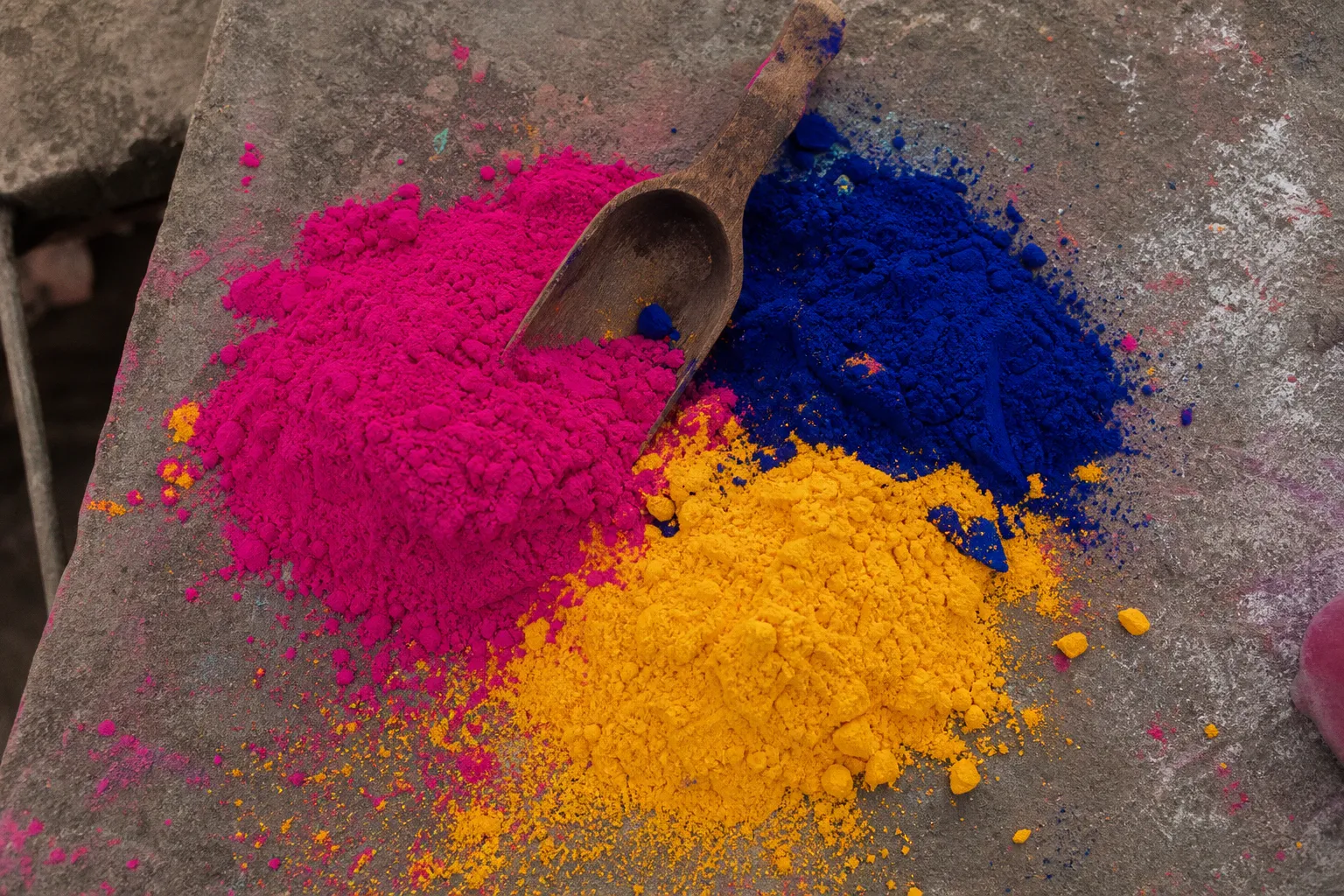
Holi follows on March 4, 2026. It marks spring and is associated with the victory of good over evil. Holika Dahan bonfires take place on the preceding evening; colour play follows on the main day.
The operational issue is not whether Holi is “fun.” It is whether you want to move through a city during unrestricted colour throwing.
In destinations with large visitor populations, including parts of Rajasthan and Uttar Pradesh, the public-facing version can be intense. Dry powder, dyed water, water balloons, loud music, alcohol consumption, and street gatherings are common. The experience varies by neighbourhood, hotel policy, age group, and local custom.
Use a controlled plan:
1. Choose the setting before the day begins. A hotel-organised gathering, a known cultural venue, or a hosted event is more predictable than walking into an unfamiliar street celebration.
2. Protect electronics and documents. Carry neither a passport nor an exposed phone unless necessary. A waterproof pouch is more useful than a fashionable bag.
3. Wear clothing you are prepared to discard. Festival colours can stain fabric and footwear. White clothing is common but not operationally required.
4. Confirm transport the day before. A driver may not operate normally through colour-throwing areas. App-based taxis can be scarce or delayed.
5. Set personal boundaries early. You are not required to participate. Declining colour application is acceptable, particularly in controlled settings.
Do not assume that every Indian city treats Holi as a full-day public event. In some places it is limited, family-based, or concentrated in specific neighbourhoods. In others, activity begins before midday and continues after dark.
Ganesh Chaturthi: 10 to 11 days of processions and immersion routes
Ganesh Chaturthi begins on September 14, 2026. It marks the birth of Ganesh and runs for approximately 10 to 11 days. The modern public form of the festival was promoted in Pune in 1893 by Bal Gangadhar Tilak, turning household worship into a large civic gathering.
Maharashtra is the primary reference point for foreign visitors, particularly Mumbai and Pune. Public installations, known as pandals, house Ganesh idols for the festival period. The closing phase involves visarjan: processions carrying idols to designated water immersion points.
Mumbai during Ganesh Chaturthi should be planned as a city with moving restrictions. A route that normally takes 25 minutes may be impractical when a procession crosses it. Do not rely on road travel to catch a domestic flight, intercity train, or evening bus during major immersion days.
The workable approach is chronological:
- Book central accommodation before confirming individual pandal visits.
- Keep airport and long-distance rail movements outside major procession windows where possible.
- Use suburban rail or Metro options when they serve your route, but expect crowding.
- Ask the hotel desk which roads are blocked that day. This is more useful than a generic online map.
- Do not plan a tight multi-stop itinerary around immersion routes.
Pune is a relevant alternative for travellers who want the festival’s historic public context without Mumbai’s scale. It is not a low-crowd substitute. It is simply a different operating environment.
During Ganesh Chaturthi, the published route is provisional. The procession has priority over the itinerary.
October and November: Durga Puja, Dussehra and Diwali
The most operationally dense period in the India festival calendar for tourists is October through November. In 2026, Navratri runs from October 11 to 20. Durga Puja’s main dates are October 16 to 21. Dussehra, also called Vijayadashami, falls on October 20. Diwali’s principal day falls on November 8.
These events are connected by religious calendars and themes, but the visitor experience differs substantially by region.
Durga Puja in Kolkata
Durga Puja is West Bengal’s major annual public festival and is recognised by UNESCO as Intangible Cultural Heritage. It commemorates Goddess Durga’s victory over Mahishasura. The principal period lasts 10 days, while the busiest public days concentrate toward the end of the cycle.
Kolkata’s defining feature is the pandal circuit. Temporary structures are built across the city to house Durga idols and themed installations. The most prominent pandals attract long pedestrian queues. The queue is part of the event. It is not a sign of poor organisation that will disappear if you wait ten minutes.
A practical Kolkata plan has three rules:
- Stay near one transport corridor. Crossing the city repeatedly during the peak evenings wastes time.
- Visit local pandals early. Neighbourhood installations can be more accessible than the highest-profile locations.
- Keep one evening uncommitted. Road diversions and crowd density determine what is feasible after sunset.
Do not purchase informal promises of VIP or fast-track access without verification from the organiser or your accommodation provider. Availability and rules vary by pandal and by year.
Navratri and Dussehra
Navratri is observed across India with regional variations. In Gujarat, it is associated with Garba and Dandiya Raas dance events. In northern India, Ramleela performances and Dussehra effigy burning are major public formats. The term describes a nine-night religious period; it does not describe one standard programme.
For travellers attending a Garba event in Gujarat, clothing is not merely decorative. Venues may expect traditional dress, ticketing, or advance registration. Confirm entry rules directly with the organiser. Do not arrive assuming a public square is an unrestricted venue.
Dussehra on October 20, 2026, can involve large crowds around Ramleela grounds and effigy-burning sites. Keep distance from combustion areas. Follow local police barriers. Firework debris and sudden crowd movement are predictable conditions, not exceptional ones.
Diwali: five days, uneven closures
Diwali is a five-day festival observed nationwide. Its main day in 2026 is November 8. It is commonly described as the Festival of Lights and marks the triumph of light over darkness, but the travel consequences are more concrete: domestic demand rises sharply, cities become noisier, and business schedules become uneven.
Diwali is not celebrated identically in every state. Household rituals, regional names, food traditions, commercial customs, and the timing of local activity vary. In some areas, the days immediately before the main celebration are commercially active. In others, individual businesses close early or operate with reduced staffing.
For foreign visitors, the critical variables are:
- Accommodation: Book early in major cities and domestic holiday destinations. Families travel during the period, not only international visitors.
- Rail and air travel: Avoid placing a non-refundable connection close to a festival-day departure.
- Restaurants: Hotel restaurants may operate normally while independently run venues close or reduce hours.
- Noise: Fireworks are common in many urban areas. Request a room away from street frontage if sleep is a priority.
- Air conditions: Post-firework air quality can vary by city and weather. Do not assume a specific air-quality level in advance; check local reporting close to arrival.
Diwali is often marketed as a universal visual spectacle. That is incomplete. Much of the festival is domestic, family-based, religious, and neighbourhood-specific. A visitor should observe without treating private rituals as an open performance.
Kerala, Nagaland and Rajasthan: regional festivals require regional planning
The famous festivals of India are not limited to the north Indian circuit. Some of the most distinct events are regional and should be planned around their local geography rather than added as an overnight detour.
Onam in Kerala
Onam is Kerala’s principal harvest festival. It honours the mythical King Mahabali and is associated with Pookalam floral designs, Kathakali performances, Vallamkali snake boat races, and the Onasadya feast.
The Onasadya is a formal vegetarian meal commonly served on a banana leaf. A typical feast includes around 13 dishes. Service follows an order, and the meal is intended to be eaten by hand. Do not treat the banana leaf as a disposable plate to be folded or cleared immediately while others are still eating. Follow the host’s lead.
Boat races are not a generic daily Kerala attraction. Their schedules, locations, access arrangements, and weather conditions are event-specific. Confirm the local programme after selecting your travel dates. Do not build an itinerary around an assumed race day.
Hornbill Festival in Nagaland
The Hornbill Festival takes place during the first week of December in Kisama village near Kohima. It brings together Nagaland’s 16 major tribes for music, dance, craft displays, and cultural programmes.
The limiting factor is accommodation capacity. Kohima and the surrounding area do not absorb peak demand as easily as Delhi, Mumbai, or Bengaluru. Book lodging and transport first. Programme selection comes after that.
Treat the festival as a public cultural event, not as unrestricted access to private community life. Ask before photographing people closely, entering designated areas, or handling crafts and ceremonial objects. This is basic practice, not a special rule invented for tourists.
Pushkar Camel Fair
Rajasthan’s Pushkar Camel Fair takes place over five days between Kartik Shukla Ekadashi and Kartik Purnima, the full moon. It combines livestock trading involving camels, horses, and sheep with religious bathing at Pushkar Lake and public events.
The fair’s date changes with the lunar calendar. Its trading function is real, but the visitor-facing programme is also substantial. Expect price pressure on rooms in Pushkar and Ajmer. Do not assume that a Jaipur-based day trip will provide enough time once road traffic and entry congestion are included.
Festival etiquette: participation has boundaries
India’s festivals are public in different degrees. A procession on a city road is public. A household prayer is not. A temple courtyard may be accessible while the inner ritual space is restricted. The practical rule is straightforward: access is determined locally.
Use these defaults:
- Dress more conservatively than you would for a beach destination, particularly at temples, family events, and religious processions.
- Remove shoes where required. Look for the shoe-storage area rather than leaving footwear at an arbitrary entrance.
- Ask before photographing worshippers, priests, children, performers preparing backstage, or people eating.
- Do not touch idols, offerings, or ritual objects unless explicitly invited.
- Accept food with the right hand where local custom requires it. If uncertain, watch first.
- Do not consume alcohol near religious gatherings unless the venue is explicitly licensed and separated from the observance.
- Follow crowd-control barriers even when local residents appear to bypass them. Their familiarity with the area is not transferable to you.
Festival food is often temporary, location-specific, and prepared at high volume. Eat where turnover is visible. Choose stalls with cooked-to-order items where possible. Carry drinking water during long pandal queues and processions. This is especially relevant during Holi, Durga Puja evenings, and large Dussehra grounds.
Booking and transport: the practical sequence
The main error in festival travel is booking the festival before booking the route. Reverse that order.
First, select the city where the event has its strongest local form. Kolkata for Durga Puja. Mumbai or Pune for Ganesh Chaturthi. Kerala for Onam. Kisama near Kohima for Hornbill. Gujarat for Uttarayan or Navratri.
Second, secure accommodation within a realistic transport radius. A lower room rate outside the city may be false economy if roads close after the evening programme begins.
Third, book long-distance transport with a buffer. During a festival period, avoid same-day sequencing such as an early-morning intercity train, afternoon hotel check-in, evening procession, and overnight flight. Any one delay can collapse the entire chain.
Fourth, check local schedules after arrival. Festival programmes are often finalised locally. Hotel desks, venue organisers, district tourism offices, and local transport announcements will be more current than a generic annual festival page.
Fifth, retain an exit option. Know the nearest railway station, airport transfer point, and walkable route back to your accommodation if road traffic stops.
The reliable festival itinerary has one fixed anchor per day. Everything else is optional.
Final operating checklist
Before committing to any major Indian festival in 2026, confirm the following:
- The date is correct for the current year and calendar system.
- Your hotel is booked before the festival’s peak days.
- Your arrival and departure do not depend on a road route likely to be closed by a procession.
- You have checked whether the event is public, ticketed, local-only, or subject to venue capacity.
- Your clothing, footwear, electronics, and documents match the conditions of the event.
- You have one nearby meal option and one return route that do not depend on last-minute transport.
- You are attending to observe local practice, not to demand access to it.
The list of festivals of India is long. The correct choice is not the largest event on a travel website. It is the event whose date, city, transport load, and access conditions fit the rest of your trip.